- 15+ Years Experience
- Fully Guaranteed Work
- Family Run Roofing Company
- You Deal With Us & Only Us
- Top Rated On All Platforms
- Free Estimates
Chimney Repointing: When Is It Needed & What Does It Cost?

Does your chimney need repointed? Learn the signs of deteriorating mortar, what chimney repointing involves and what can affect the cost of repairs.
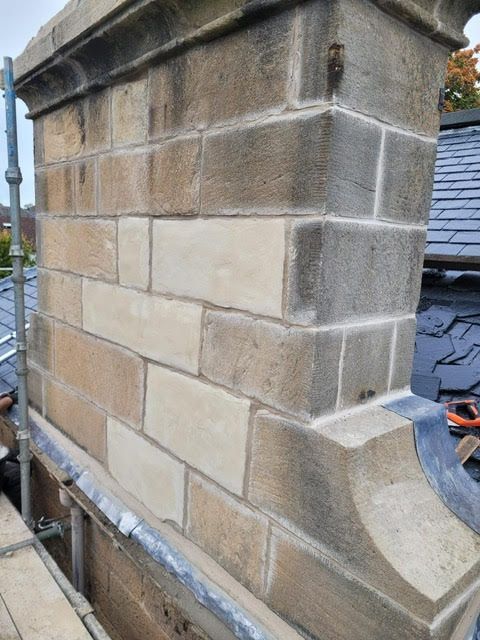
Chimneys are among the most exposed parts of a property. Over time, rain, wind and changing temperatures can cause the mortar joints between bricks or stone to deteriorate. If the mortar becomes cracked, loose or starts falling away, chimney repointing may be required to restore the joints and help protect the chimney from further deterioration and water penetration.
At Easy Way Roofing, we carry out chimney repairs and repointing across Central Scotland. Before recommending any work, we inspect the chimney to establish its condition and determine what repairs are actually required.
What Is Chimney Repointing?
Repointing involves removing deteriorated mortar from the joints between the bricks or stonework and replacing it with appropriate new mortar. Mortar plays an important role in the structure and weather resistance of a chimney. As it deteriorates, gaps and cracks can develop, leaving the masonry increasingly exposed to the weather. Repointing restores these joints rather than unnecessarily rebuilding sections of chimney that remain sound.
How Do I Know if My Chimney Needs Repointing?
Some deterioration can be visible from ground level, although a closer inspection may be required to properly assess the condition of the chimney. Signs that could indicate repointing is required include:
- Cracked or crumbling mortar joints
- Sections of mortar missing between bricks or stone
- Loose or deteriorating masonry
- Pieces of mortar falling from the chimney
- Damp or water ingress associated with the chimney
- Visible gaps developing in the joints
- Previous pointing repairs beginning to fail
Not every chimney problem requires repointing. The source of the problem should be established before deciding what work is necessary.
Can Damaged Chimney Pointing Cause a Leak?
It can. Where mortar joints have significantly deteriorated, rainwater may penetrate the chimney masonry. This can contribute to damp or water ingress, particularly during periods of prolonged or wind-driven rain. However, deteriorated pointing isn’t the only possible cause of a leaking chimney. Damaged lead flashing, defects in the chimney stack and problems with the surrounding roof can produce similar symptoms. That’s why it’s important to inspect the chimney as a whole rather than assuming the pointing is responsible. If water is already entering around your chimney, you can also read our guide to leaking chimneys, chimney flashing and leadwork repairs.
→ Read: Leaking Chimney? Chimney Flashing & Leadwork Repairs Explained
What Happens When a Chimney Is Repointed?
The exact process depends on the construction and condition of the chimney. Generally, deteriorated mortar is carefully removed from the affected joints before the joints are prepared and new mortar is applied. The objective isn’t simply to cover damaged mortar with a new surface layer. The condition of the existing joints needs to be assessed so that deteriorated material can be dealt with appropriately. While carrying out chimney repairs, other defects may also become apparent, such as damaged leadwork, loose masonry or problems around chimney pots. These can then be discussed before any additional work is carried out.
Does the Whole Chimney Need Repointed?
Not necessarily. If deterioration is limited to a particular area, only the affected sections may require attention. Where mortar has deteriorated extensively around the chimney stack, more comprehensive repointing may be appropriate. The condition of the existing mortar and masonry will determine the extent of work required. An inspection is therefore preferable to assuming that an entire chimney needs repointed simply because one section looks damaged.
How Much Does Chimney Repointing Cost?
There isn’t a standard price for chimney repointing because the amount of work required can vary considerably between properties. Factors that can affect the cost of repointing a chimney include:
- The size and height of the chimney
- How much of the pointing has deteriorated
- The condition of the bricks or stone
- Access to the chimney
- Scaffolding requirements
- The type of property and roof
- Whether other chimney repairs are required
- The condition of the leadwork around the chimney
A relatively small area of deteriorated pointing is very different from extensively repointing a large chimney stack with difficult access. For that reason, we inspect the chimney before providing a quotation rather than using a standard price that may bear little relation to the work actually required.
Is It Better to Repoint or Rebuild a Chimney?
That depends on the condition of the chimney. Where the masonry remains sound and deterioration is primarily affecting the mortar joints, repointing may be sufficient. If bricks or stone have become badly damaged, loose or unstable, more substantial repairs may be necessary. In some circumstances, part of a chimney may require rebuilding rather than simply repointing. The appropriate solution should be based on the actual condition of the chimney rather than automatically choosing the most extensive repair.
What Happens if Damaged Chimney Pointing Is Left?
Deteriorated mortar is unlikely to improve by itself. As joints become increasingly exposed, further weathering can occur and water may penetrate more easily. During colder weather, moisture within damaged masonry can also contribute to further deterioration. Dealing with deteriorated pointing before surrounding masonry becomes badly affected can potentially prevent a relatively localised repair developing into more extensive chimney work.
Can Chimney Repointing Be Done at the Same Time as Leadwork Repairs?
Yes. If both the pointing and leadwork around a chimney have deteriorated, it can make sense to address the problems as part of the same chimney repair. The chimney flashing should therefore be inspected along with the masonry. If the lead is damaged, lifted or no longer forming an effective weatherproof junction between the chimney and roof, leadwork or chimney flashing repairs may also be required.
Do You Need Scaffolding to Repoint a Chimney?
Safe access is an important consideration with any chimney work. Whether scaffolding is required will depend on factors such as the height and position of the chimney, the roof and the extent of the work being undertaken. Access requirements can therefore also affect the overall cost of chimney repointing. We assess this as part of determining what work is required for the individual property.
Chimney Repointing & Repairs Across Central Scotland
Easy Way Roofing carries out chimney repointing, chimney repairs and leadwork across Central Scotland, including Glasgow, Edinburgh, Stirling, Falkirk, Alloa and surrounding areas.
If you’ve noticed deteriorating mortar, damaged masonry or signs of water entering around your chimney, we can inspect the chimney and surrounding roof to establish what is causing the problem. We provide free roof surveys and estimates, with a quotation based on the work actually required.
→ Find out more about our Chimney Repairs & Leadwork services
→ Find out more about our Roof Repair Services